
Scotland, Pt 2
In which we come to the rescue of some fellow Americans

First off, I want to semi-apologize for the fact that it might be all Scotland all the time around here for a bit, but I’m also sorry-not sorry because this was one of the best things I’ve ever done and I want to document it. I’ve never traveled as much as I would have liked, either in the states or abroad, but it has been a lifelong dream to go to England and/or Scotland. This post is going to be a little long, too, but I wanted to capture the whole day. Semi-relatedly, I wish Substack would allow you to put pictures side by side, but if it’s possible I haven’t figured out how to do it.
I am happiest when I’m in nature. It is when I am most able to slow down and notice, to be truly in the moment — what others call mindfulness I call “noticing.” I recently read this article in The New York Times about awe and the quote from Barbara Brown Taylor resonated with me. From the article “The roaring orange of the azaleas in her yard, the insistent song of a whippoorwill, the galloping of horses at feeding time. At this point, she said, ‘even a spider can knock me out.’” I don’t think I necessarily think of these as miracles in the same way that she does, but being in nature, noticing, does reawaken in me that there is something that connects us to one another and to the earth.
Of course I can do this noticing all the time, but I find that routine and familiarity often blind me to the beauty that is around me every day. So, being in a new environment automatically makes me more aware of my surroundings, but my god Scotland is an especially beautiful country. I have so many pictures of just scenery because I couldn’t believe the stark beauty of the hills, the heather, the sea and the sky. If I lived there, I suppose I might become immune to the beauty, but it’s hard to believe that that would be true. Just as when I was in Washington and Oregon, the sheer size of the mountains was enough to startle me out of any kind of complacency and I’d like to think that I would never grow accustomed to that.
As I mentioned in my previous post, we arrived on Skye just ahead of Storm Amy, a storm that in America we would certainly have labeled a tropical storm at best and a hurricane at worst. Forecasters were calling for torrential, possibly flooding rains and winds with gusts up 80 and 90 mph and I will admit to having a few moments of “you have GOT to be kidding me” re: the timing before stoically reminding myself that there are few things that we have less control over than the weather so I needed to just figure out how to make the best of it. It probably helped that everyone we encountered from the Enterprise rent a car agent to our B&B hosts were incredibly blasé about all of it. “We’ve put flashlights in all the rooms,” our hosts said.
Our first full day it was overcast, but the storm had not quite arrived yet so I would like to say here that we decided to “make hay while the sun shines,” but the sun hardly every shone the entire time we were there. I want to make sure you know this is not a complaint, though. The mist and fog does something to the landscape to create its own specific kind of beauty and I had decided pretty quickly that I was also not going to be upset about the lack of sun. We knew that it rains a lot in Scotland and all the Skye forums I’d joined joked about having four kinds of weather within a day, or even within the same hour, so we’d come prepared with mackintoshes1 and water resistant clothes and shoes.
But, the storm was hovering just off the coast and moving pretty quickly and so, leery of traveling too far afield from our B&B, we decided to explore the upper part of the island, the Trotternish peninsula. We got out our handy dandy map and saw that there were some interesting things just up the road and our host suggested a walk to Rubha Hunish, so we hopped in the car and braved our first single track road and headed out.
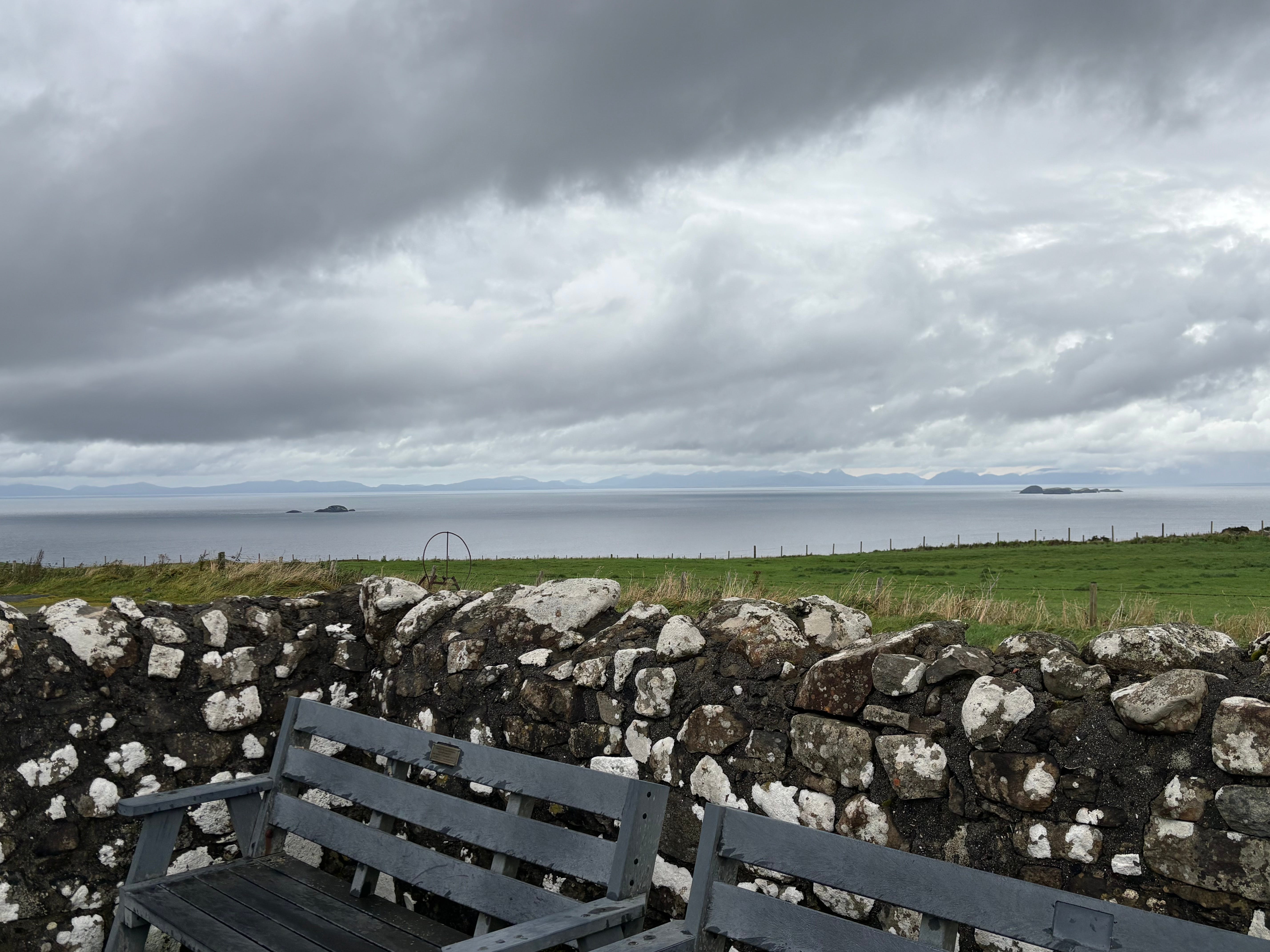
Our first stop was Kilmuir cemetery, an old cemetery that contained graves from at least the 1700s to the modern era. Maybe it’s because as a child I spent many a weekend accompanying my mother to old cemeteries where we did charcoal rubbings of hard-to-read headstones, but I’ve always loved a cemetery and the older the better. This one definitely fit the bill with a bonus that the surrounding scenery was stunning.
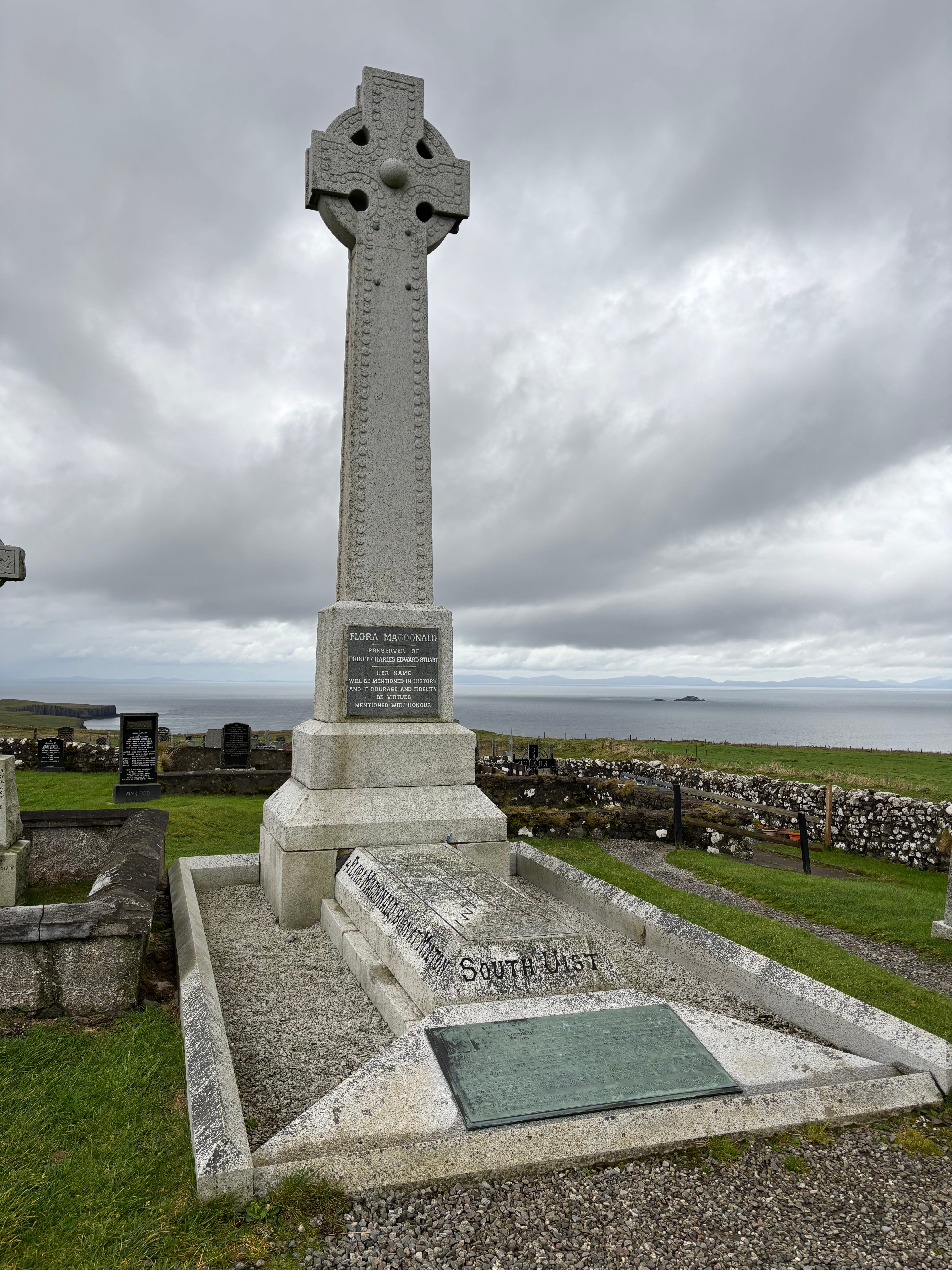
Kilmuir is the final resting place of Flora McDonald, famous for helping Bonnie Prince Charlie escape the Isle of Skye after the failed Jacobite rebellion. This monument is not old, but replaced a crumbling, dilapidated mausoleum that was said to have been nearly destroyed by people breaking off sections as souvenirs, though this seems to be more myth than fact.
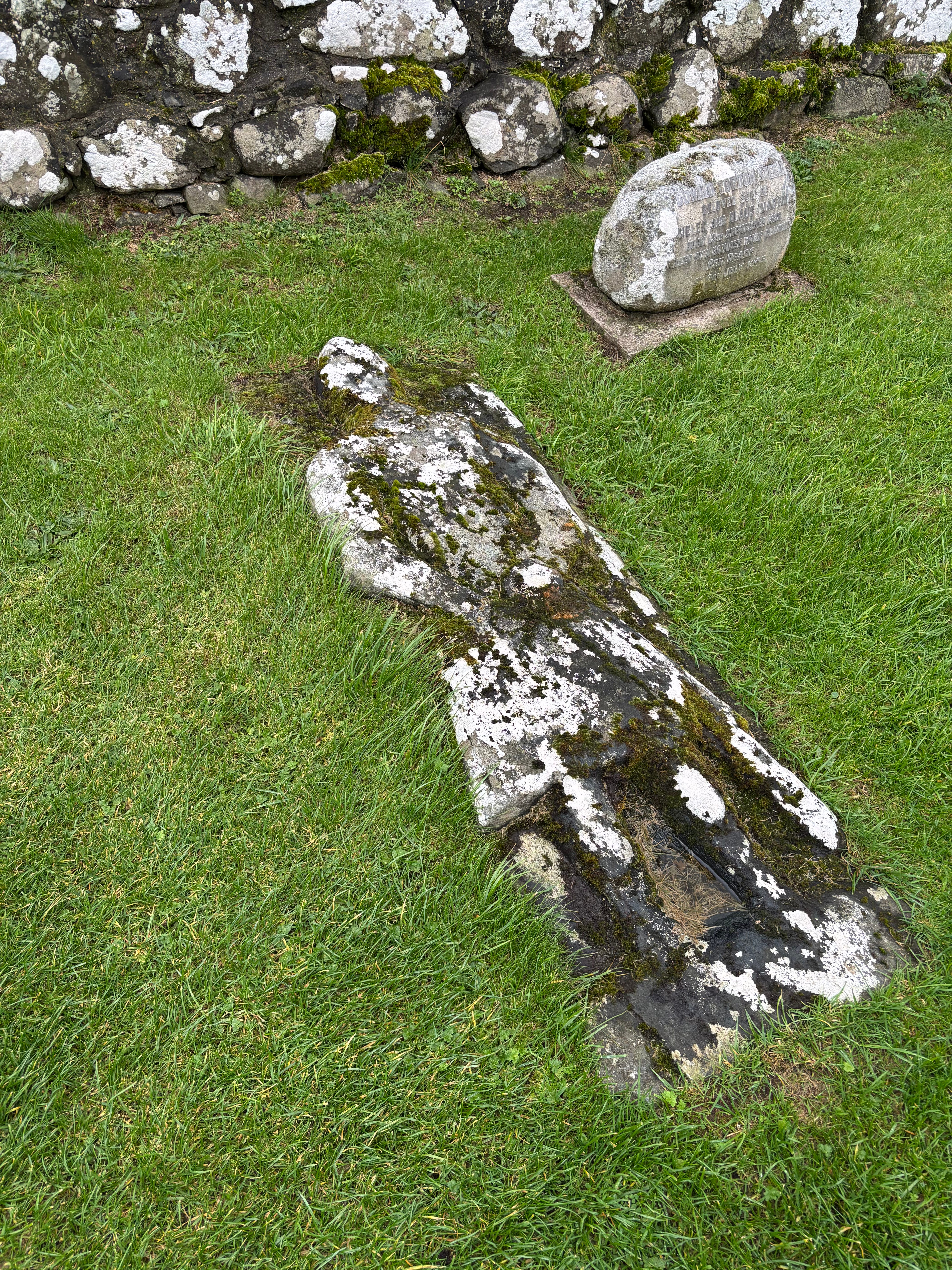
Another fascinating grave was at the back of the cemetery near a very old ruins of some kind of structure that the internet tells me might have been a chapel of some sort or perhaps a mausoleum. Marked by the effigy of a knight, it is the grave of Angus Martin, or Angus of the Wind,2 born during the reign of Mary Queen of Scots, who is said to have earned his name by insisting on going to sea no matter the weather. Myth also states that Angus stole the effigy atop his grave, and though extremely heavy, to have carried it on his back up the hill from the harbor, though historians think both unlikely. In either event, the effigy has weathered enough to be kind of delightfully creepy.3
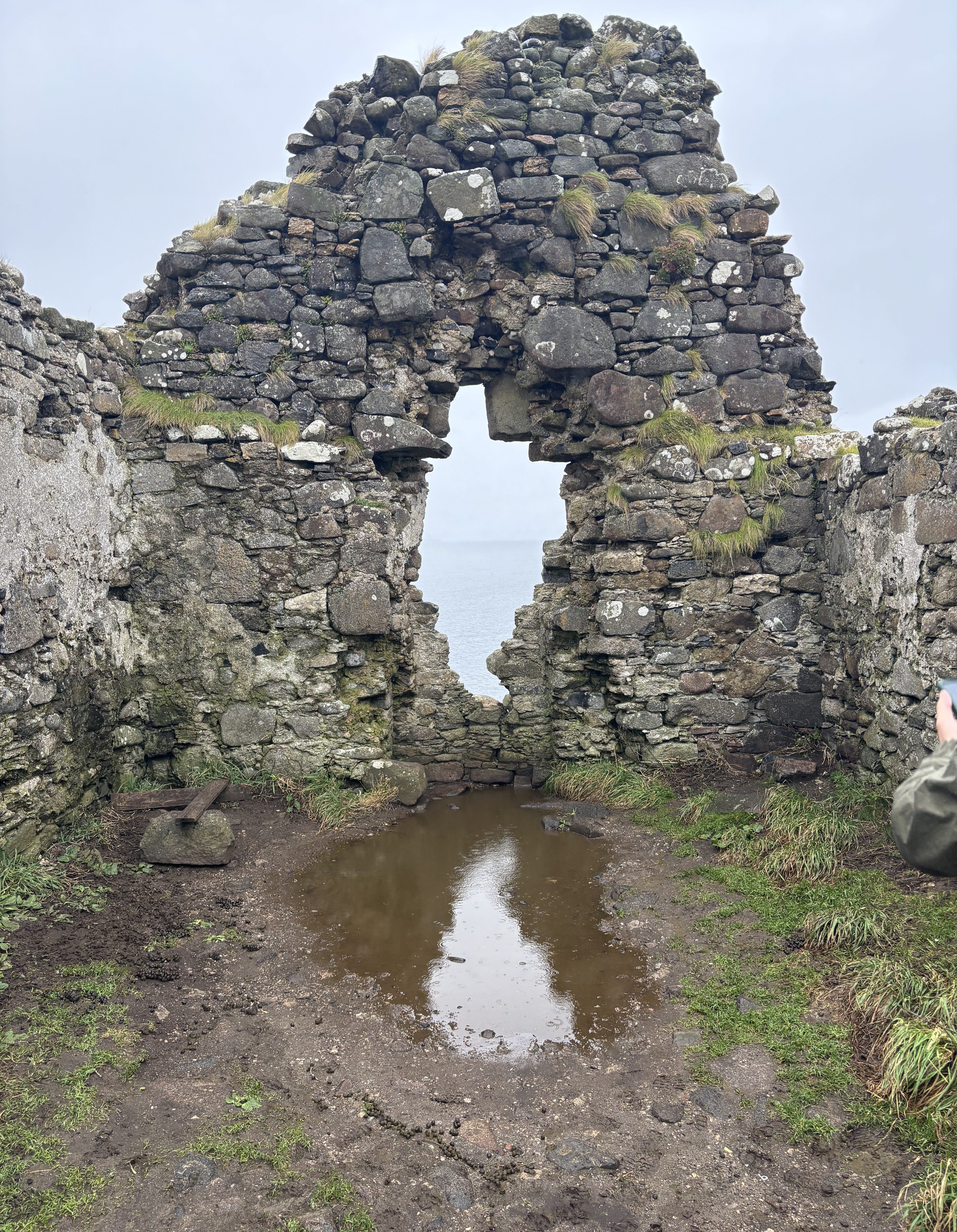
From the cemetery we headed to the ruins of Duntulm Castle. I didn’t know it at the time we were there, but Duntulm originated as an iron age broch, but the current ruins likely date from the 1500s. There’s not a lot left and what is there sits riiiiight on the edge of a cliff.
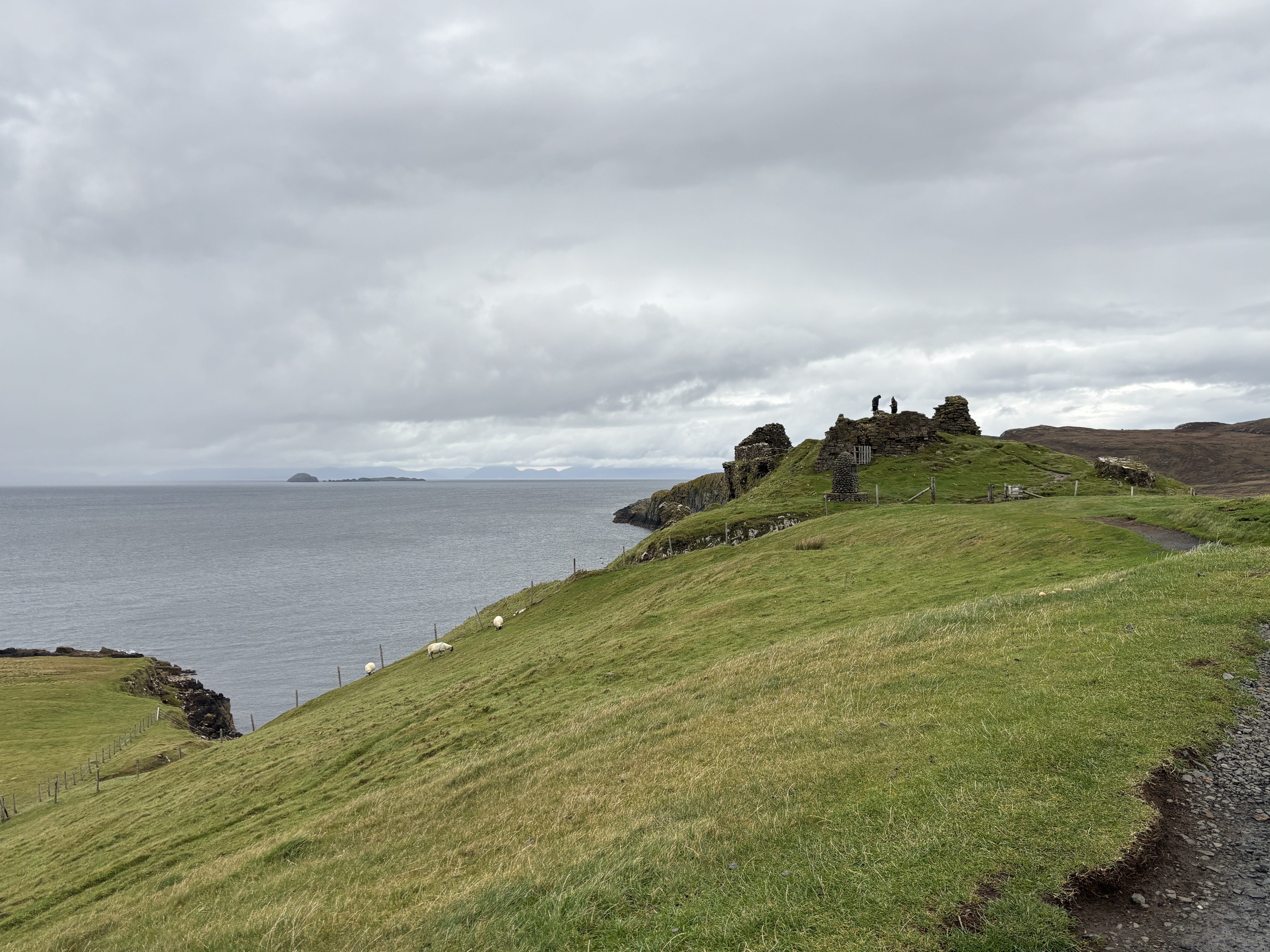
In the picture below, the opening sits right on the cliff’s edge so that if you look out, all you can see is water and a sheer drop down. I went and peeked through the opening, much to my husband’s horror (he is terribly afraid of heights). Had I known that in the 1980s a large chunk of Duntulm fell into the sea, I might have done otherwise. The ruin is supposedly haunted by a number of people, but the scariest one to me is that one of the ghosts is said to be that of a nursemaid who dropped the baby of the clan chief from this window onto the rocks below and she was tossed after it Supposedly you can hear her screams, but thankfully we heard nothing but wind and sheep.
From there we went just down the road to the trail head to Rubha Hunish. It, too, was accessed through a pasture, and I was fascinated to see a farmer gathering his sheep into some kind of walled structure, his sheep dog hopping a gate. You may recall that I have become fascinated with sheep and I wanted to stop and film them, but I felt shy and unsure about filming strangers, so I only took about two seconds of video. I have an embarrassing number of photos of sheep from this trip.
The walk to Rubha Hunish was easy, not what I would call a hike at all, with the sea on one side and a heather-filled pastured on the other. Some said that we were missing Scotland at its best by going in the fall instead of the spring or summer, that the the heather in bloom in the summer is not to be missed, but I loved the greens and browns and oranges, and most of the heather still had purple buds.
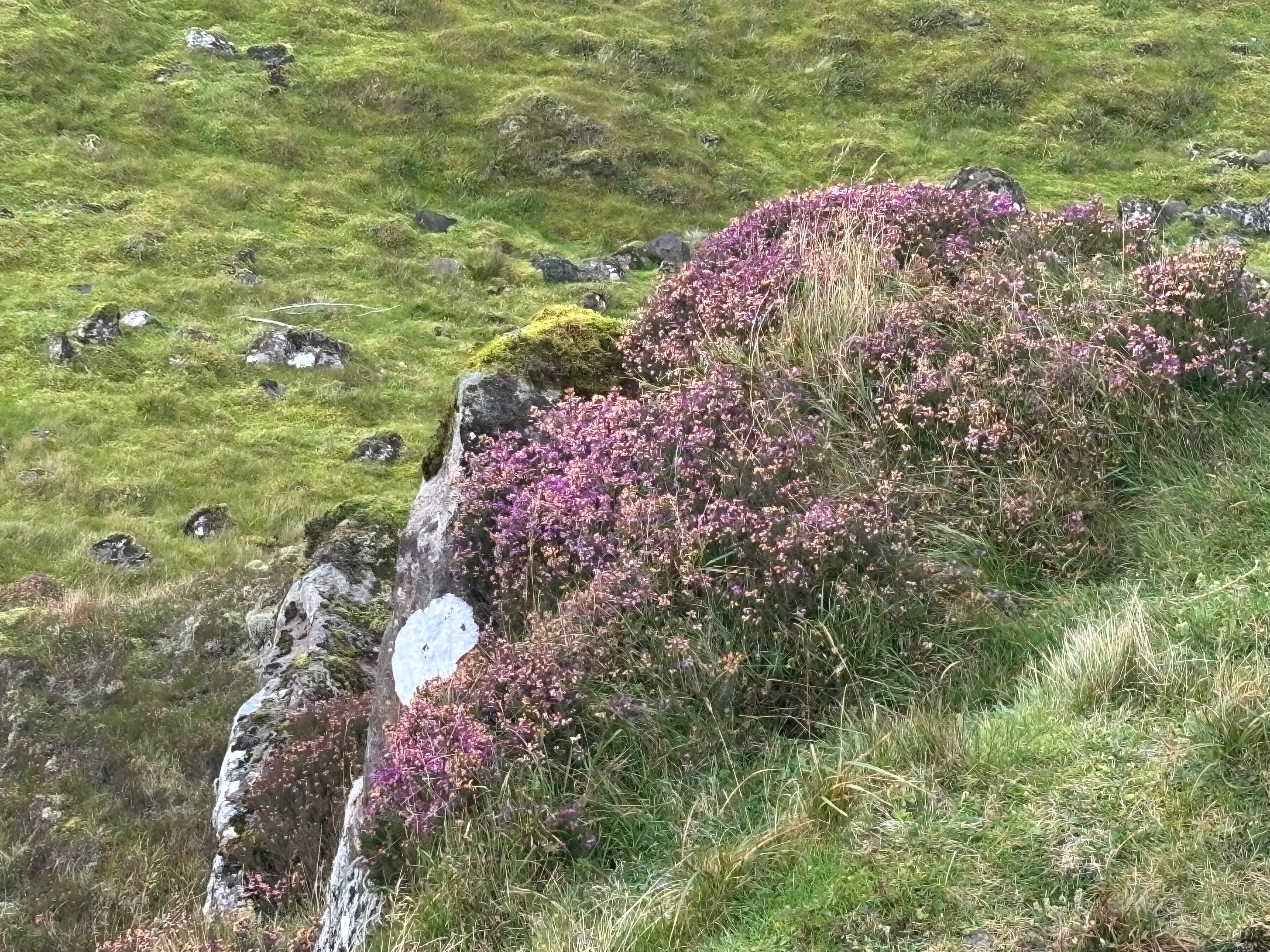
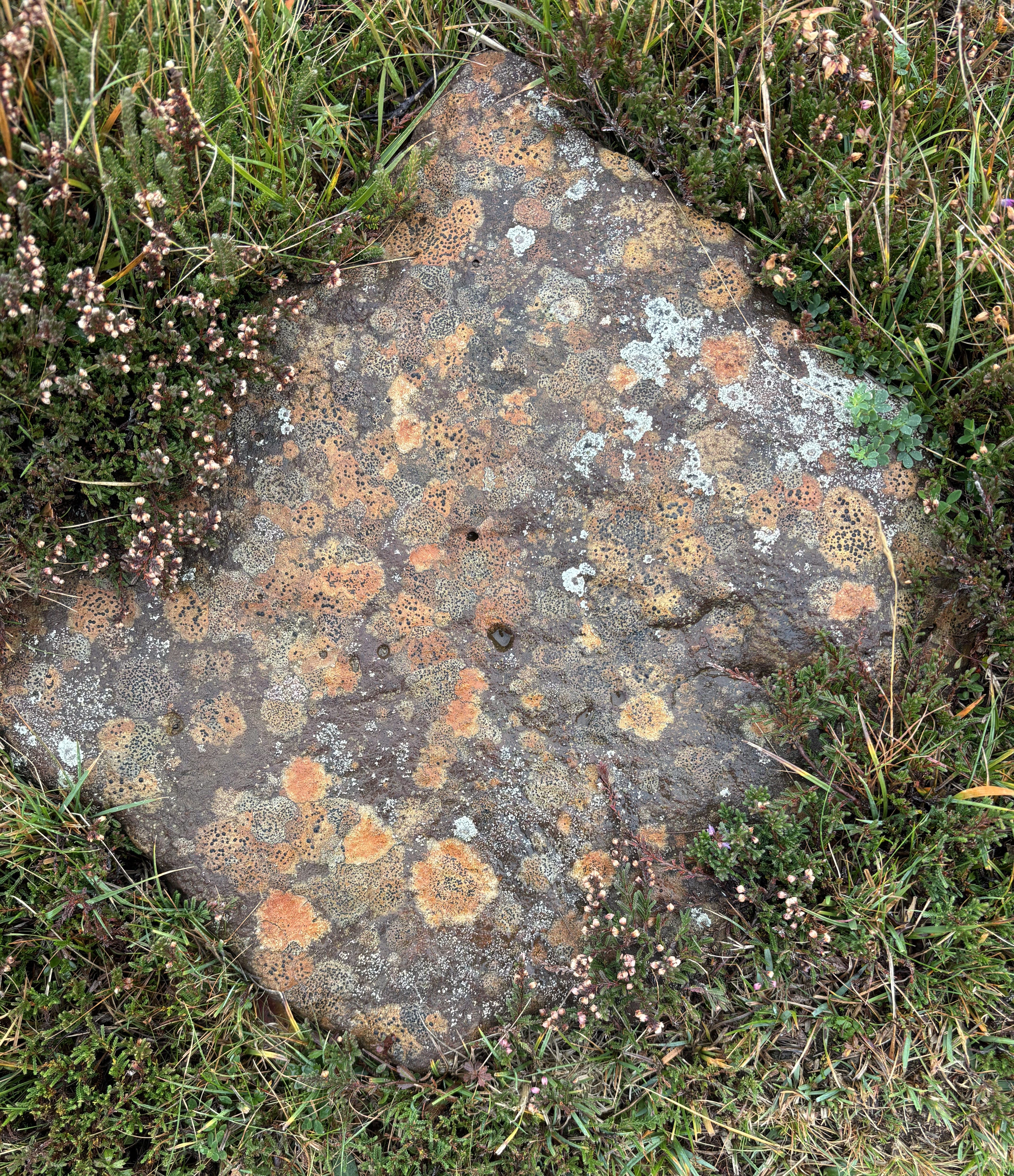
As we walked, we came upon an older gentleman making his way somewhat slowly across the bumpy, sometimes rocky pasture, walking stick in hand. We spoke and when he heard our accents he asked us where we were from. He was from Maryland as it turns out and his family was somewhere farther along on the trail. We chatted briefly before leaving him still making his slow but steady way up the trail. As we walked we were keeping an eye on the weather and could see from our weather apps that the edge of Amy was about to make landfall, so we quickened our pace and decided to take the easier of two routes to the top of the trail. It seems redundant and unimaginative to keep describing the views as incredible, but they were unlike anything I’ve ever seen. Sweeping. Majestic. Moody.
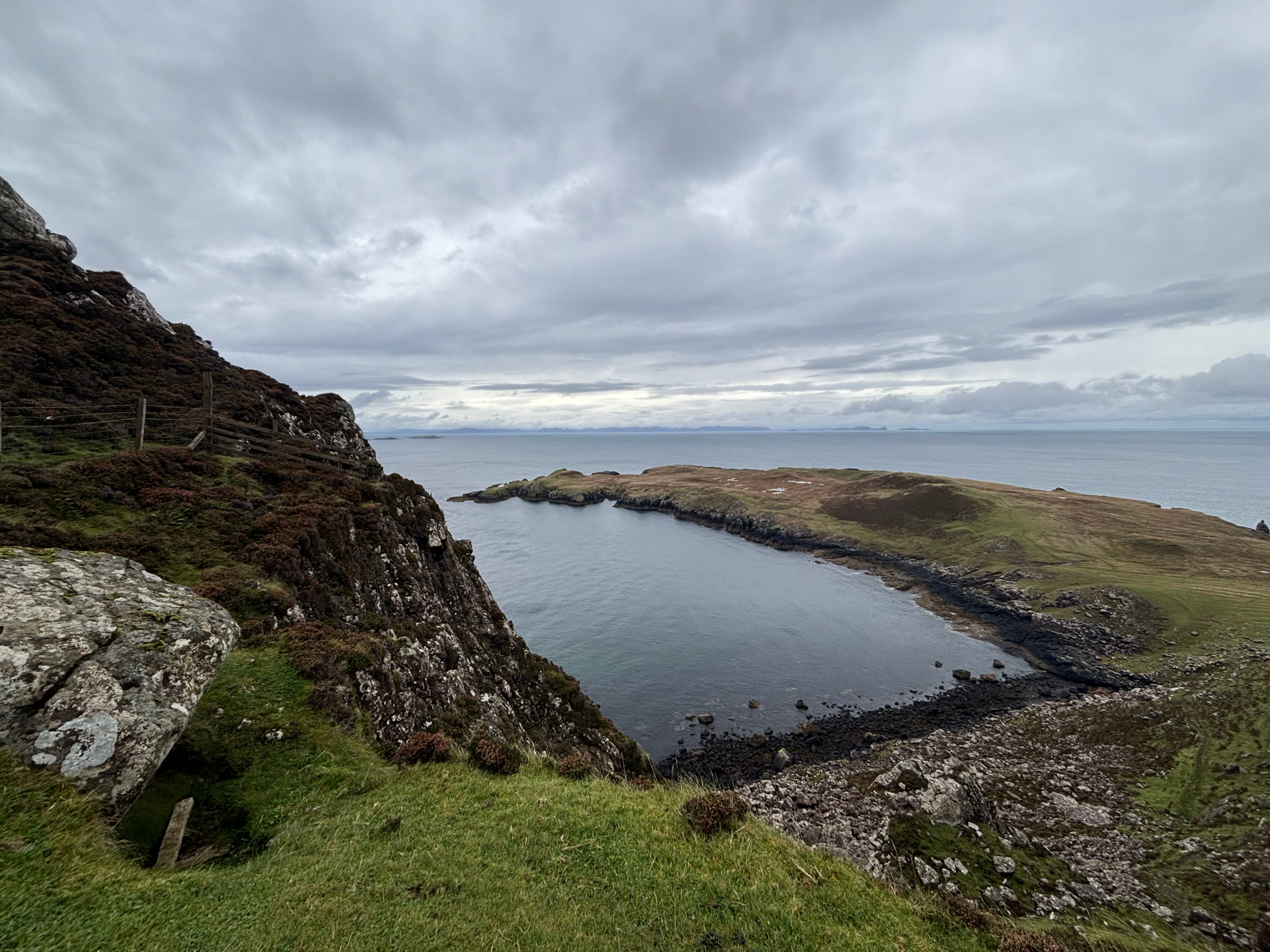
We took a few pictures and then headed back to our car. As we walked, it began to rain a little and the wind picked up. As we walked, we came upon the older gentleman again, this time making his way back to the car park. We had encountered his family near the trail end — they had called to us from the higher, more difficult trail, inquiring about their dad and we had assured him that he was okay. As we had headed back they were nowhere in sight, so we asked him if he had the keys to their car so that he could take shelter from the elements until they returned, but he said he did not, which, frankly, was poor planning on their part. We offered to let him sit in our car until they returned because by this time it was much darker and colder and the rain was increasing.
We walked ahead and got in our car to wait, and within in a few minutes he came into sight again, and my husband got out to reiterate our invitation to sit in our car. He came and joined us and we chatted and learned a lot about him — his name was Bernie and he was in his late 70s. He had seven grown kids and multiple grandchildren, he raises sheep and his wife uses their wool to knit sweaters and hats, that he also has a few geese and some highland cattle.
The weather continued to worsen and he voiced his concerns about his family. He shared that his wife was on the trail with their daughter, her husband and their 9 month old baby in a backpack carrier. About that time his daughter called his cell phone and we could hear her say, “It’s terrible. We’re trying to get back.” Apparently, she and her husband had taken a longer trail back, one that went down the cliff face and that was much more treacherous than they had expected, especially given the weather, and she didn’t know where they were going to end up.
A few moments later she called again to say that the trail had ended at a farm about a quarter of a mile away from the car park where we sat. By this time it was really raining and very windy and it was growing ever darker and we could hear her concern about the baby,4 especially, and we could tell that Bernie was also very worried. So, we offered to drive Bernie to meet them and so we did and the daughter and the baby got in the car with us — all we had room for — and we drove them back to the car park to get their car so that they could drive back down and get the husband. Needless to say they were all extremely grateful and we were so pleased that we were able to help.
I did not start the day expecting that we would come to the rescue of some fellow Americans, but it was a reminder how quickly things can go sideways and also how nice it is to connect with fellow human beings, to be able to help someone in a way that was so small, really, for us, but was so meaningful for them. I’ve never been a big Tennessee Williams fan, but I was reminded of Blanche DuBois’ last line in A Streetcar Named Desire. “I have always depended upon the kindness of strangers.” It was a moment of connection, human being to human being, and it was more beautiful to me than any scenery we saw that day.
Did you know mackintoshes, or raincoats, were invented in Scotland? A lot of things were invented in Scotland. A few years ago I read How the Scots Invented the Modern World and it was a fascinating and engaging book.
Angus of the Wind is not to be confused with Giant Angus (McCaskill), who was also a local fella. There is a Giant Angus Museum in Dunvegan that was, unfortunately, closed when we drove by.
Apparently fashion designer Alexander McQueen also has a marker in this cemetery, though we did not see it. Per the internet, his ashes were scattered in Kilmuir and a stone erected in 2010. I would like to have seen this, but don’t think I did. Or perhaps if I did I didn’t realize it was that Alexander McQueen. I mean, I would not have expected him to be in Skye, you know?
The backpack carrier had a hood on it, but the weather was so bad.
More, more! I loved following your trip on IG. Wildly envious.
More Scotland, please! (and I love sheep too, especially if they hop!)